Showing posts with label public policy. Show all posts

Monday, April 2, 2012

On the Individual Mandate, Part Three: Is It Interstate Commerce?


The last two days I have discussed the Obamacare Supreme Court case in terms of what the Supreme Court will do.  This is all reading tea leaves, of course, and what authority have I to think I read them right?  Well, if you’re reading this, I guess it’s because you accept my authority.  (Thank you Hypatia and Aloysius!)

Today, rather than saying what I think the Court will do, I’ll take a stab at what they should do.


First of all, against Kennedy (the libertarian) and the liberals (the utopianists), I support the rule of law.  I think we need to abide by the text of the Constitution, or change it.  I could say much more about the complications of stare decisis, and the expansive way the Constitution is sometimes read, but for now, I think it suffices to say I think the only real question is whether the Obamacare mandate can be described as part of Congress’s power “to regulate commerce between the seveal States.”


So: is health care interstate commerce?  On first glance, I would say obviously not.  I take my children to their doctor in the next county over in our state.  That transaction is not interstate commerce, anymore than the decision to buy bread from the baker down the street.

Sometimes we go to see doctors in New York, across state lines.  But even that, I think, is not commerce among the several States.  I’m getting into hazier territory here.  But I can take a stab.  Article nine, on the limits of Congress, talks about States passing tarrifs on interstate Commerce, or Congress preferencing one State’s ports over another.  The original meaning of interstate commerce would seem to be questions of what happens at state borders: the federal government can search for contraband in a car crossing state borders, but a state government cannot. 

Take raw milk, a current issue.  New Jersey has a law that you cannot sell unpasteurized milk.  Pennsylvania does not have such a law.  It would seem to me that the point about regulating commerce among the States is to say that New Jersey has the right to make laws about commece within New Jersey; the federal governmnet does not.  What I buy within New Jersey is none of Congress’s business, so Congress can neither outlaw nor legalize raw milk sales within the state. 

But if I go to Pennyslvania to buy raw milk (as some people do), then it gets complicated.  Pennyslvania has the right to legalize or outlaw those sales within Pennyslvania borders.  New Jersey still has the right to say that I cannot sell that milk in New Jersey; it may have the right to say I cannot drink raw milk within New Jersey (that would involve other issues, both in New Jersey’s Constitution and perhaps in the Fourteenth Amendment); and New Jersey can even pass a law saying I can’t carry raw milk over the border.  But Congress has the right to intervene, trumping New Jersey’s law and saying that I either do or do not have the right to buy things in Pennyslvania for consumption in New Jersey.  Since this is interstate commerce, Congress has a right to make regulations, pro or con.


As interstate commerce got more complicated, so did interstate commerce laws.  In the late-nineteenth century, Congress passed anti-trust laws.  Railroads are, for the most part, of their very essence matters of interstate commerce.  A company whose whole raison d’ĂȘtre is to transport things across state lines is subject to Congress.  A railroad wholly within New Jersey is none of Congress’s business.  But when it goes across state lines, Congress can say that this company needs to abide by the rules of companies that participate in interstate commerce.

Next Congress got involved in the meat packing industry.  The stockyards in Chicago are doing a discrete task: chopping up animals and shipping them off.  And to that extent, they are only under Illinois state law.  But they are shipping that meat off to other states yet.  Congress can say, you can do whatever you want with animals within your state, but we pass laws saying that you can’t ship them east across the Indiana border if they are a contraband product by Congressional law.  If Congress says that meat crossing state lines cannot participate in certain business practices (like price fixing) so be it.

Later comes the truly absurd claim that if a farmer produces corn for his own cows, because he could have bought that corn from someone in another state instead, Congress can stop him.  That is absurd.  I guess it does produce a precedent the Court has to think about, making my Scalia-rather-than-Thomas argument difficult.  But . . . well, for now, let me ignore that.  Let’s stipulate that regulating interstate commerce means Congress has a right to pass laws about products that cross state lines.


Now, modernity makes this complicated.   When I take my kids to the doctor in Oradell, we are paying the doctor for a service, and we are not crossing state lines.  So far, not interstate commerce.  But what about when he gives them a shot from a factory in Pennsylvania?  At first it seems reasonable to say that Congress could say, do whatever you want with your doctor.  But if he’s going to give you a shot made in a different state, here are the conditions: he must also give you all the other shots we think are appropriate, he must have the federal licensing we think appropriate, etc. 

But how far does this go?  If he uses rubber gloves made in China, does my doctor visit now become “commerce with Foreign nations”?  What if his lab jacket is from Argentina?  Or his shoes from Italy?  At some point we draw a line. 

Take the rubber gloves.  It seems reasonable for Congress to pass laws about the import of rubber gloves: to put a tarriff on them, maybe even to check that they are not carrying rubber-glove-borne diseases(?!)  But at some point, Congress has to settle down.  In the eighteenth century, eating in an Inn built with nails from another state would not, I’m pretty sure, be construed as interstate commerce, even though those nails are absolutely essential to the Inn. 

We might recognize that Interstate Cartels are an example of interstate commerce; but that does not mean that everything remotely involving things that have crossed state lines is interstate commerce.  When the New Jeresy doctor buys vaccines from Pennsylvania, that is interstate commerce, and Congress probably has the right to ask whether he’s the kind of person who is allowed to purchase appropriately regulated medicines across state lines.  But when the New Jersey doctor gives vaccines to New Jersey kids, that isn’t interstate commerce.

Interesting to note, by the way, that when it came to the Chicago slaughterhouses, the application of Interstate Commerce law was NOT to say that because the pigs crossed state lines, you could dictate how they were fed before they crossed the lines.  What Congress regulated was the business practices – price-fixing – which were of themselves interstate acts: people in Chicago setting prices in New York.


What about our doctor visits in New York?  I don’t think it’s interstate commerce for me to buy a hot dog in New York.  And I don’t think it’s interstate commerce for me to get medical care in New York.  It is not interstate commerce for me to get a prescription in New York, or to fill it in New York.  But if I bring the prescription or the pills over the border?  Then, perhaps, New Jersey has a right to question whether such a presctiption is allowed here – and Congress has the right to override New Jersey’s decision in either direction. 


Which brings us to insurance.  Even if health care itself is not interstate, insurance might be.  I definitely think that the power to regulate interstate commerce means that Congress has the right to say that I can buy insurance from a provider in Pennyslvania.  This is precisely the original purpose of Congress’s right to regulate interstate commerce – to be able to override New Jersey if it tells me I can’t buy things in Pennyslvania.  Though if I buy insurance from a company (or branch of a company) operating exclusively within New Jersey, and everyone in the pool is in New Jersey (which is, I think, the way it works now), that is not interstate commerce, and Congress does not have the right to regulate it.

But what if I use my insurance here to pay a doctor in New York?  That seems to be crossing state lines.  And so there, perhaps, New York has a right to say we don’t deal with that kind of insurance company, and Congress has a right to override them.  They can, at the least, require New York to let my doctor receive payment from my New Jersey insurance company – or my Pennsylvania insurance company, for that matter.  Or they could say that interstate insurance companies can’t work that way.


My conclusion, then, would seem to be that if Congress wants to make things difficult for me, they could prevent me from using my insurance to go to a specialist in New York.  But it’s hard to see why.  This is not about preserving health, not the great big noble purpose Obamacare sets out to pursue.  The goal of helping health can happen entirely within state lines.  The only place Congress needs to intervene is to make sure that I can get medical care – including, perhaps, more affordable insurance – across state lines.

But forcing me to buy insurance?  Even granted that everyone needs insurance (which I do not grant) and that government has a fundamental interest in the health of every individual (which I grant only in part), it’s not clear to me that there’s anything fundamentally inter-state about health care or health insurance.

Saturday, March 31, 2012

On the Individual Mandate, Part Two: The Uniqueness of the Issue


Yesterday, I argued that based on their jurisprudence, the Court will strike down the Obamacare mandate 5-4.  Today, some further predictions about the Court’s actions, based on the uniqueness of this particular case.


First, the uniqueness of health care. The Obama Administration makes a very valuable point.  The Justices are concerned about one central question: if the federal government can compel individuals to buy health insurance, is there anything they cannot compel you to buy?  The slightly humorous hypothetical example was broccoli.  Could Congress pass a law mandating that I buy broccoli?  Since nobody thinks they should be able to do that, key to the Obama argument is that health insurance is unique.

More about this tomorrow, but the argument – correct, I think – is that health insurance is unique, and thus uniquely subject to Congressional legislation, because (a) everyone can get sick, (b) you never know when you’ll get sick, and (c) the country recognizes an obligation to keep people alive and well. 

Sometimes libertarians make comparisons between health insurance and auto insurance.  But the huge difference is that if your car dies, it’s just a car.  The Obama Administration rightly argues that we feel a weightier obligation not to let people die; and health insurance (or some kind of safety net) of some kind is central because you never know who’s going to get sick next.  Therefore, says the Obama Administration, one needn’t worry that this Congressional intrusion in individual liberty is limitless.  We can draw a very clear line between Congress’s right to compel you to buy health insurance and a right to make you buy anything else.

That’s a good argument.  But I don’t think it will convince Kennedy.  The reason is that health is such a universal kind of thing.  At first glance, it seems that health is a limited good – Congress intervenes on this one thing, but on nothing else.  But then you realize that almost everything in life involves health.  Broccoli moves from being a silly example (eating broccoli a meaningless action that many people don’t want to take) to actually a very good example (broccoli as arguably important to your health). 

If Congress has the right to make sure you are taking care of your health, Congress has the right to ask if you’re getting enough sleep, exercising, engaging in risky behavior, consuming good or bad foods, minding your posture, or causing yourself unnecessary stress.  If Congress can compel you to watch out for your health, Congress could argue that yoga, tai chi, and meditation are good for your health, and issue a mandate for those.  The Court cannot intervene by disagreeing on the concrete judgment that meditation is good for your health; if it agrees that everything to preserve health is fair game for Congress, it has to allow these things.

The line is actually quite blurry, because health, precisely because it’s important as outlined by the Obama Administration, ends up being a limitless case.  What makes health care unique is precisely what makes it limitless.  Thus Kennedy (I authoritatively predict!) will vote against the insurance mandate.


The last consideration of the Court’s decision is the issue of “severability”: IF the Court strikes down the individual insurance mandate, can the rest of the law stand?  The Court is said to have a “presumption of severability”: that is, unless proven otherwise, the Court assumes that it can strike down one part of a law, and leave everything else in place.  But the question is whether it’s leaving the rest in place if it strikes down this point.  That is, is the rest of the law unchanged when this part gets struck down?

The answer, I think, is no, and from what I’ve read, even Sotomayor (who is a utopianist, and thus will have no problem with the mandate, but who does have some concern about maintaining her independence, so that she does not look like a political hack who takes orders from the President who named her to the Court) may agree.  There was universal agreement when the law was put into place that it doesn’t work without the mandate.  This was not just one provision among many – comparable, for example, to the particular way the law deals with abortion, which could stand or fall without changing the rest.  This was considered to be the lynch pin, without which the “cost curve” bends in the wrong direction and the whole law doesn’t work. 

Certainly, for example, striking down the individual mandate also kills the rules about preexisting conditions.  Under the law as written, an insurer can’t deny you insurance just because you have a preexisting condition.  And that works because everyone has to get insurance anyway (the mandate).  But take away the mandate, and the preexisting-condition rule destroys the whole rationale of insurance.  If you know that you can get insurance after you already have a problem, then you only buy insurance when you have a problem.  Like buying car insurance only when you have a repair to make.  This part of Obamacare just totally doesn’t work without the mandate.

So, okay, strip that out.  But what else needs to be stripped out?  The Obamacare legislation is famously long, so long that almost none of the legislators who passed it were able to read through the whole thing.  The Justices, including Sotomayor, were extremely skeptical of their ability to go through and figure out piece by piece, through hundreds upon hundreds of pages of technical legislation, what is and what isn’t affected by the mandate.  That becomes extreme micromanagement by the Court: impracticable for them, and inappropriate, since it really gets into properly legislative activity.

Thus the Court has to say, if the mandate goes, the whole law goes.  Send the issue back to Congress.  Say, “figure out how this works without a mandate, and pass something that works.”  We’re not striking down the other pieces per se, so you can try them again.  But it’s your job to figure out what works without the mandate and what doesn’t – as well as what you need to do to replace it.

And the great ironic thing hanging over everyone’s head is the obvious fact that Congress has changed.  Ordinarily, striking down the whole law wouldn’t be such a big deal.  If Congress actually wanted the law that it passed, then the Court could strike down the whole thing based on problematic piece, and Congress could quickly figure out the necessary modifications and save what could be saved. The problem is that they didn’t pass the law by legitimate means in the first place – didn’t have enough votes – and then there was a huge public outcry against it, and a landslide Congressional election almost entirely based on the unpopularity of the bill. 

Surely, at least behind closed doors, the Justices have to be acknowledging this: the only reason to make the severability argument is because you know perfectly well that the present Congress DOESN’T want to repass this bill.  Hardly deference to Congress, then, to say (a) that you’re going to strip their bill of its original meaning, and then (b) that you’re doing it precisely so that the current Congress can’t change what they want to change.  It would be extreme interference in politics for the Court to make a judgment of severability precisely to protect Congressional legislation from Congressional elections.

Friday, March 30, 2012

On the Individual Mandate, Part One: The Jurisprudence of the Court


On Tuesday and Wednesday of this last week, the Supreme Court heard oral arguments on the Constitutionality of Obamacare.  Tuesday the argument was on the individual mandate (the command that everyone in the country purchase insurance.  Wednesday the argument was over whether the rest of the thousand-plus-page law can stand if the mandate falls.  (Monday there were arguments on a technical point of jurisdiction; the Court seems clearly to think it has jurisdiction.)

My not-so-expert prediction is that Obamacare will be struck down by the Supreme Court.  Alito, Scalia, and Thomas are all considered dead set against it; the liberals are all for it.  Kennedy and Roberts, then, are the key votes.  Most believe Chief Roberts will follow Kennedy, if only to get in on writing this very significant decision.  It all rests, then, on Anthony Kennedy.

I did a little study of Kennedy’s past rulings.  I’ll spare you the details, but I’d say his jurisprudence is based on liberty.  Thomas is a radically strict constructionist: what the Constitution says, goes.  Scalia, Alito, and Roberts (probably in that order) are less strict constructionists: because they believe in the rule of law, they prefer to do what the Constitution says, but they also realize that precedent is the rule of law.  If interstate commerce, or due process, has been read in a bizarrely broad way in the past, they argue, then that reading is part of the rule of law; it will not do for the Supreme Court to make words mean something vastly different from what they’ve been understood to mean.  So they try gradually to roll things back towards a strict reading of the Constitution, but realize that this is a gradual process. 

Meanwhile, the justices of the Left, Ginsberg, Breyer, Kagan, Sotomayor, are all more or less utopianists.  Their jurisprudence is based not on the text of the Constitution, but on what it ought to be – a jurisprudence, one could say, of justice.  If they think Obamacare is just, the text of the Constitution is irrelevant.  This, I should add, is not an unreasonable jurisprudence.  I am on the side of the text of the Constitution, because I think it is key to the rule of law that we follow written texts, and I think the rule of law is key.  But it is reasonable for the liberal justices to say that the Constitution is a terribly antiquated text – in many ways it is – and that, anyway, for eighty years now, years of massive societal change, we’ve been ignoring it, so why go back now? 

There are good Catholic political philosophers, people who focus on “natural law” such as Hadley Arkes and J. Budziszewski, who agree with the liberals on this, and who strenuously reject the thinking of the Court’s conservatives.  They think the Court should rule for what is right, not what is written down.  As a student of Thomas Aquinas, I think this focus on natural law is a little naive, and I think it’s a matter of natural law, and rightness, to follow the written text (and thus the rule of law) anyway.  But it’s worth noting that the liberal perspective is not so crazy.

Nor is Justice Kennedy’s.  He has a simplified version of what’s right or good: a balance of individual liberties.  This is actually a pretty respectable view.  Instead of the utopianism of Ginsberg etc., which obviously falls into all sorts of subjectivism, he says, look, the basic principle of America, and of good government, is that the government won’t intervene unless you’re trampling on other people.  Reduced to a clear jurisprudential rule, the test is liberty.  You lose liberties only to the extent that you’re taking away other people’s liberties.

On this test, I think the Obamacare individual mandate falls because, by making people buy a product they don’t want, it unnecessarily intrudes on individual liberty. 

An interesting part of the decision will be how it’s written.  To varying degrees, Thomas, Scalia, Alito, and Roberts (in that order) will argue that the mandate is invalid because it does not match the enumerated powers in Article One, section eight, of the Constitution: specifically, a health-insurance mandate does not fall within Congress’s power to “regulate interstate commerce.”  But Kennedy, the key vote, will argue that it’s invalid for a totally different reason.  Expect him to write the decision, with significant concurring arguments from the others; maybe even a big one signed by all four.

Some further details tomorrow.

Tuesday, March 20, 2012

Helping Fishtown (part two)


Yesterday I introduced Charles Murray’s book Coming Apart, which argues that Fishtown (that is, people without college degrees) is culturally handicapped from keeping up with Belmont (that is, people with college degrees).  But I criticized Murray’s policy proposals for fixing the problem – arguing that he probably doesn’t think those policies are any good either. 

I agree with him that culture runs deeper than policy.  But, as Daniel Patrick Moynihan said, “The central conservative truth is that it is culture, not politics, that determines the success of society.  The central liberal truth is that politics can change a culture and save it from itself.”  Both are probably true.  Politics can be used to help the cultural problem.

So here are a few policy proposals of my own:


First of all, accept the Fishtown/Belmont divide.  Instead of trying to get Fishtown kids into Belmont, try to help Fishtown kids themselves.  Yes, there will always be working-class kids who turn out to be better at school than all the kids from the educated classes; colleges and intellectual businesses should keep their eyes open for those kids.  But part of what Murray’s showing is that the class problem is intractable.  Murray sometimes seems insistent that working-class people can only be happy if we turn them into information-class people.  Boloney.

In fact – well, this shows I should read his books, instead of just reviews, since I’m probably missing his point; but since you probably haven’t read Murray's books either, my summaries can help us think even if they get Murray wrong.  In any case, Murray’s last book, Real Education (2008),  has been my greatest touchstone for this. 

He says (and backs it up with lots of sociological evidence), imagine a kid getting C’s in high school; the only thing he’s good at is Shop.  Somehow he gets dragged to the guidance counselor who tells him, (of course!) “you can do it!  You can make something of yourself!  You should go to college!”  So he spends four years taking enormous debt doing something he doesn’t enjoy and isn’t good at.  At the end, he gets a job in middle-management, sitting in a cubicle making very modest pay for doing something so soul-crushing that they make black comedies (the movie Office Space, the sitcome The Office) to make fun of it.  Whereas if his stupid guidance counselor had let him be a carpenter, he would have saved himself the four years accumulating debt, and gone right into something that pays better and has higher job satisfaction – and that he’s particulary good at and enjoys.  Shunting Fishtown kids to Belmont is bad for kids.  (And – a topic for another time – probably bad for our society, as it means we’re shifting resources from artisan products that make life more beautiful to an ever-increasing bureaucracy that makes life more stupid.)

So we should start by letting Fishtown be Fishtown.  Every subsidy means taking money from one group and giving it to others.  Even if the money ultimately comes from Belmont people, tax money sent to subsidize college educations is money they can’t spend paying carpenters (etc.) to build beautiful things. 

Yes, we should scold people who don’t work.  But also, we should recognize that building things – Fishtown work – is nothing to spit at.

Rick Santorum’s ideas for promoting factories are full of loopholes (they don’t help carpenters and plumbers, for example – and, see above, the carpenters and plumbers ultimately join all other non-factory people to pay for them), but Santorum’s on the right track: let’s find ways to encourage factories, and all other blue-collar work. 

Mayors and governors could stop insisting that every city be a replica of Silicon Valley.  Factories, everyone will tell you, made Newark stink.  But poverty, joblessness, and hopelessness make Newark stink worse.  Stop regulating out non-Belmont jobs, and start building public transformation (not trains, which are a boondoggle, but better buses) that help poor people get to work.  Cut it out with all the stupid money spent on ever-expanding freeways – essentially wealth-transfer from people who don’t drive SUVs in the exurbs to people who do.  Etc.  Realize (a) that when we subsidize Belmont, it is ultimately everyone outside – Fishtown people – who pay the bill; and (b) that Fishtown, if we could clean up its social problems, is a perfectly noble place to live.


Second: social conservatism.  A post for another day.  But realize that nothing is more destructive than the destruction of families.  Especially for the lower classes.  Pornography is not free speech, it is war on the family; “free speech” originally referred to political speech, the one kind of speech liberals want to hyper-regulate.  “Consenting adults” is fine – except that sex, of its very biological nature, constantly ends up involving non-consenting children.  As does marriage.  Sex and marriage are not about individual freedom, they are about the rights of the next generation.  Their nobility should be defended.  Who suffers most when they aren't?  The fatherless children of Fishtown.

So too the churches.  The rich -- perhaps! -- can lock themselves up in enclaves where the decline of public religion doesn't matter.  (In fact, rich suburban drive-through churches are a pretty poor substitute for the public reality that religion ought to be.)  But for those in Fishtown, who cannot so fully privatize their lives, the decline of public religion is also the decline of private religion.  (To the extent that there is such a thing.)  The attack on public expressions of religion is an attack, among other things on the people of Fishtown. 


Third: okay, fine, open some options for kids to get from Fishtown to Belmont, with education reform.  But realize, first, that children are always above all products of their parents.  Don’t try to trump the parents – but give them options.  Promote homeschooling – and recognize that homeschoolers are double-taxed, paying all the other costs every other parent pays; paying the same taxes to fund the rotten public schools; and paying the costs of materials to school their own children – including the salary of the stay-at-home mom “teacher.”  So at least let parents who school their own children opt out of paying for everyone else.  Give them (us!) the freedom to do it, and give them some of the money they are saving the state.  Education choice should not be limited to the rich.

If parents want to send their children to schools, give them the option to send their kids to good schools.  If parents want to ship their kids to the Belmont Public Schools, and their kids aren’t causing trouble, let them do it.  If parents want to send their kids to church-subsidized schools, don’t make them pay double to do it.  And, by all means, don’t let the teachers’ unions hold other people’s children hostage.  Parents should have the right to educate their children, whether it’s to ennoble their lives in Fishtown or to give them a shot at Belmont.


And finally, yes, as Murray says, find a way to subsidize those who are desperately trying to make ends meet -- but do away with the negative incentives.  Right now, if you want welfare, you have to quit work.  If you want the Earned Income Trap – I mean, the Earned Income Credit – you have to make sure not to make too much money, since they will take your credit away if you work too many extra hours to get your family ahead.  These are stupid, perverse, negative incentives.  Send every family with children a check, regardless.  Help them out.  Send every disabled person a check, regardless, help them out.  Don’t tell them that if they work they will lose their benefits.  The poor do need help, because it can be very hard to get started when you have no money at all.  But they need the checks not to be phased out, because phase-out is a trap to keep you stuck at lower income.

Imagine the single mother – the “welfare queen” of Newt’s welfare reform.  According to pseudo-conservative orthodoxy, she had children just to get rich off the welfare system.  Except, of course, that no one got rich off of welfare.  And children cost a lot of money.  And children are an enormous lot of work.  No, she wasn’t having children to get money.  She was having children to have a family.  (That she couldn’t keep a husband is a social problem that needs to be dealt with – but the problem is the lack of husband, not the children.)  Yes, welfare – or the hidden welfare trap that is the Earned Income Credit – lets her afford to raise a family.  But that’s a good thing.  The bad thing is that if she gets a job, she loses the money.  And the even worse thing is that the 1990’s politicians – including, I’m very sorry to say, Rick Santorum – decided that there’s nothing worse than a stay-at-home mom -- unless she's rich -- and they decided that instead of helping her to get out of poverty or to get and keep a husband, they would penalize her for being with her children.  Wrong solution.  Focus on the right problems.  Give her the money to help her out, and focus your reform energies on making sure she can rise out of poverty, take care of her children, and find a husband.  Giving her money -- guaranteed money, with no phase outs -- to help with her children is the simplest way to start.


Fishtown needs help.  It needs ways to escape poverty.  It needs a morale booster, after a couple generations of being told that its work is demeaning.  It needs economic help, after a couple generations of subsidies from Fishtown to Belmont (always ultimately paid by whoever isn’t getting the subsidy, even if the middle-man is rich people who can’t spend because they’re being taxed), based on a false American dream based not on family, community, and honest work but on silly ideas about how great it is to have a piece of paper claiming you got a college education and work at a cubicle in middle management.  It needs social help, including a deligitimization, in law and in culture, of sexual irresonsibility.  

But Fishtown probably doesn’t need a lawsuit against private companies that stupidly rely on an ever stupider bastardization of college education.

Monday, March 19, 2012

Helping Fishtown (part one)


Charles Murray, one of my favorite public thinkers, has been all over the opinion pages (as author and subject) for his new book, Coming Apart.  He argues, in short, that there’s a growing cultural divide between the educated and the uneducated.  His sociological data shows (or apparently shows: I haven’t actually read the book), contrary to popular belief, that the upper classes, who live in the kind of enclave he calls “Belmont,” are not only harder workers, but also more likely to stay married and go to church, while the denizens of “Fishtown,” along with a failing work ethic (evidenced, above all, by vastly increased numbers of working-age men who claim to be unable to work and in need of government assistance) also don’t get married or go to church. 

Murray’s been criticized for his lack of solutions.  He urges a kind of welfare reform that I’ve been promoting for years, whereby one doesn’t have to quit working in order to get government assistance.  But otherwise, his solution is entirely cultural.  He says there’s nothing much we can do other than for the people of Belmont to start “preaching what they practice.”  Here’s how he put it in a piece in the Wall Street Journal this weekend:

To bring about this cultural change, we must change the language that we use whenever the topic of feckless men comes up.  Don’t call them “demoralized.”  Call them whatever derogatory word you prefer.  Equally important: Start treating the men who aren’t feckless with respect.  Reckognize that the guy who works on your lawn every week is morally superior in this regard to your neighbor’s college-educated son who won’t take a “demeaning” job.  Be willing to say so.
...The cultural shift that I advocate doesn’t demand that we change our minds about anything; we just need to drop our nonjudgmentalism.

That’s good rhetoric.

I wonder if Murray’s lack of solutions is also, in part, rhetorical.  I’d bet he has some ideas about policies that would help.  But he wants to keep the conversation focused on the bigger point.

In fact, in another recent piece, in the New York Times, Murray gave in and actually made some proposals:
1.      Demand that unpaid internships pay the minimum wage.  Unpaid internships are a huge educational advantage available only for those whose parents can subsidize them.
2.      Get rid of the SAT, which, contrary to its supposed purpose, does not measure pure intellectual potential, but also whether your parents could pay to put you through a test-prep class.  Another unfair obstacle to education for the lower classes.
(In a sign of mercurialness, Murray offers this as one of his four policy proposals, then claims that he thinks the SAT is actually working fine.  He’s playing with us.)
3.      Replace ethnic affirmative action with socio-economic affirmative action: instead of lowering entrance standards for black kids, lower entrance standards for poor kids.
4.      Some public-interest law firm should argue in court that requiring a BA for a job amounts to a form of discrimination, since the lowering standards of BA’s tend more to tell where you come from than whether you actually have any skills.

I see the advantages of all these proposals.  But I don’t think they end up being much good, and I suspect Murray doesn’t either.  He’s too smart for this – and, again, I think he’s more interested in getting us talking than in pushing any of these reforms.


I agree, for example, that the BA has become a stupid entrance requirement.  (I am an undergraduate professor.)  And I agree, more than Murray does, that SAT’s are not working.  But what would replace these things?  The problem is always unintended consequences.  If we get rid of the SAT, what will we use instead?  At least the SAT pretends to be measuring “aptitude,” or academic potential.  I don’t know any simpler way to let smart kids from the wrong side of the tracks prove they are college-ready.  And, again, at least the BA pretends to be a real credential.  If a kid can’t prove he’s Belmont-worthy through four years of college, how else will he prove it?  Murray is worried that kids from Fishtown can’t get a leg up on kids from Belmont.  Remove the SAT and the BA and, stupid as those two things have become, you only make it more likely that Belmont people will hire Belmont people.  How else can they tell who from Fishtown is going to be worth the investment?

I’m all for employers and colleges experimenting with better measurements than SAT’s and BA’s.  But when policy makers demand that you get rid of something, you tend to get something worse.  I suspect Murray knows that.

Tomorrow I’ll make some alternative proposals for helping Fishtown.

Wednesday, March 14, 2012

George Will on James Q. Wilson


The most accomplished social scientist of the last half-century would occasionally visit his friend and 
Harvard colleague Pat Moynihan at the White House when Moynihan was President Richard M. Nixon’s domestic policy adviser. Once Moynihan took him to Nixon and said: “Mr. President, James Q. Wilson is the smartest man in the United States. The president of the United States should pay attention to what he has to say.” Moynihan was right on both counts. 

James Q. Wilson recently died.  George Will's encomium is fantastic.  

He also understood that although social science cannot tell us what to do, it can tell us what is not working, which has included a lot since the radical expansion of what is considered political. 

That's brilliant.

America, Wilson said, increasingly faces “problems that do not seem to respond, or to respond enough, to changes in incentives.” This is because culture is often determinative, is harder to change than incentives and impedes individuals’ abilities to respond to incentives.  

This is a great middle ground between the conservative rationalism I sometimes espouse and a good friend's liberal anti-rationalist responses.  One of my running ideas is that cultural shifts take decades.  You reap the New Deal and World War II in the 1960s; Woodstock really hit in the 1990s; we're only barely beginning to feel Reagan, etc.  Which makes history are darned difficult discipline: cause and effect are so distantly separated, and by the time effects are felt, several other causes are getting involved.  

Society tends to reward useful aptitudes. This produces hierarchies of pay and power that are resistant to rearrangement by government, including government attempts to redistribute income. Such attempts often ignore how income differences are necessary to reward activities and ignore history, which suggests that economic growth, which redistribution often inhibits, does more than redistributionist measures to narrow inequalities. 

This is a key part of the response to Charles Murray's project, which keeps highlighting the stubborn problems of the lower classes.  There's more to be said, but one key part of the answer is to say it's better to just make life better all around than to try to fight the kind of differences that we'll never do away with.

And the highest purpose of politics is to encourage the flourishing of a culture that nurtures rather than weakens the promptings of the moral sense. 

Brilliant.

Saturday, February 11, 2012

The Managerial Revolution


 My wife says I try to say too much in one blog post.  This will not be an exception. 


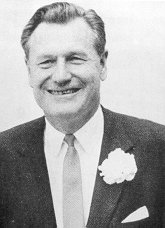
Nelson Rockefeller
I’ve been thinking about this post for awhile, and was originally going to call it “The New Rockefeller Republicans.”  After serving as Governor of New York, Nelson Rockefeller ran for every presidential election in the 1960s, and was eventually Gerald Ford’s vice president.  He had crazy amounts of money, and a kind of WASP-y (see my post four years ago on John McCain) noblesse oblige.  He supported the arts, achieved real progress in environmental conservation, greatly increased transportation and public housing, was tough on crime, especially drugs, but also fought valiantly against racial discrimination, while taking a decidedly moderate approach on abortion.  He was an enemy of ideology, ignoring the growing concerns in the 1960s and ‘70s that would become social conservatism, taking a friendly, accomodationist stance on foreign policy, and having a tin ear for questions of limited government.  He worked (at least in his mind) pragmatically for a better society.


But he was only at the center of a major mid-century movement.  Thomas Dewey, also governor of New York, ran for the presidency all through the 1940s, battling against the conservative wing of the Republican party, led by Robert Taft.  Put simply, Taft articulated a philosophy in opposition to FDR, Dewey did not.  Responsibility, pragmatism.

Dewey helped Eisenhower defeat Taft for control of the party in the 1950s.  Eisenhower was a pretty decent president – but thoroughly middle-of-the-road.  Central to Eisenhower’s presidency was the rising civil rights movement, in which Eisenhower fought hard for tolerance (not a bad goal) by sending federal troops into the states, while conservatives worried whether this goal was being achieved through destructively un-Constitutional means and an ever creeping federal State.

And Rockefeller passed the baton to George H.W. Bush, who condemned conservative philosophy as “voodoo economics,” ignored social concerns, and, for example with the Americans with Disabilities Act, continued to fight for a more pleasant easy-going world while ignoring concerns about the limits of government and the danger of perverse incentives.  (As the father of a wheelchair-bound child, I can tell you all about the glories and follies of the ADA – another time.)
New York mayor Michael Bloomberg

New York Mayor Michael Bloomberg is surely in this class, with his truly ridiculous crusades for public health, his general fight to make New York more pleasant – like a luxury hotel, he says – mixed with his general insouciance about economics and the limits of govenrment


Mitt Romney, with his maneuvering on abortion, unwillingness to take a strong stand on economics, and defense of a health care policy that ignored the dangers of creeping government – not to mention his apparent support from a class of “responsible,” non-ideological, “establishment” types, and even his Northeastern pedigree – has been labeled as the inheritor of the Rockefeller tradition.  But perhaps this new generation of Rockefeller Republicans has an important difference.

Please be clear: what follows is not intended as an endorsement (or rejection) of Romney, or of the movement of which he may be part.  It is simply an observation.  We must understand before making judgments.

Consider some of Romney’s peers.  Example One: Chris Christie, the fabulous governor of our great state of New Jersey.  Christie ran as a moderate; he was frankly dishonest with the people of New Jersey.  Once in office he led a charge to get the books in order, cutting spending especially by standing ferociously against the spend-thriftiness of the unions.  He has refused to raise taxes, but unlike the Reagan generation, who made tax cutting the prime concern and didn’t really worry about spending, Christie and his peers have refused tax hikes as an illegitimate excuse for runaway spending, but have kept their eyes on the bottom line, not on the philosophical goods of tax cuts.  Christie appears to be a Catholic in good standing and a pro-life social conservative, and he is one of America's most exciting politicians when it comes to dealing with urban problems – but that is not his focus.  He is just doing the responsible thing.  New Jersey has been living beyond its means for way too long, and it has to be stopped.  If Christie had to lie (or at least not tell the truth) to the voters in order to get elected, and if he has to ignore other good causes while fighting for these goals, so be it.

Rep. Paul Ryan
The same is true at the federal level.  Consider Paul Ryan, the great congressman from my home state of Wisconsin, and the de facto leader of the Republicans in Congress.  Ryan is a budget geek.  Again, he seems to be a pro-life Catholic, and I think he is in favor of lower taxes, but that isn’t his focus.  Ryan is worried about entitlement spending and how to get our books in order.


One of Christie’s closest friends is the governor of Indiana (and still my dearest desire from a contested convention), Mitch Daniels.  Daniels is a Presbyterian, but also apparently very pro-life and otherwise generally a social conservative.  But when contemplating a run for president last Spring (he decided not to run for personal reasons) he infamously called for a “truce” on social issues while we focus on the budget.  Many conservatives have responded that there can be no truce – witness the last week’s events, with Planned Parenthood whipping a breast cancer research organization into line, the Obama administration demanding that people with moral qualms about contraception, sterilization, and abortifacient drugs must pay for other people to get them, and the West Coast’s Ninth Circuit court ruling that there is a Constitutional right to define marriage however feels comfortable to social liberals.  But obviously Daniels had a point: we can focus more or less on these issues, and use more or less firey rhetoric even when taking a firm stand on actual policies.  Meanwhile, Daniels says, we face a new “red menace” – not Communism, but debt.  As governor of Indiana, Daniels is famous for cutting spending, finding new ways to finance freeways, battling the ever-voracious unions, and (everyone’s favorite!) making the DMV more efficient. 

The list goes on.  Scott Walker, governor of Wisconsin, is a pro-life Evangelical focused on fighting the irresponsibility of the unions (both the educational policies of the teachers and the general spend-thriftiness of all the public unions).  So is John Kasich, the governor of Ohio.

Mitt Romney can be read as part of this crowd.  Of course (perhaps) he is pro-life, pro-marriage, socially conservative, etc.  He has, after all, an exemplary family life, and is a leader in one of America’s most conservative churches.  But like Chris Christie, his biggest political booster, he has set everything else aside to fight the Red Menace.  Perhaps – I don’t know, but perhaps – he decided in Massachusetts that he would ignore all else, even lying about his position on abortion, in order to get the budget in order.  He was not great (though not bad) on taxes, not great on jobs (though he helped), and his decision on health care reform was not the best (though, I have to say, it is defensible, was the majority-conservative position before Obamacare – note that this was a non-issue when Romney ran in 2008 – and may have been the best that could be done in uber-liberal Massachusetts).  But he did balance the budget, taking Massachusetts from deep in red ink to a big rainy day fund. 

Romney explains his position on abortion

Perhaps Romney is actually the Chris Christie running for President.  Not running like Chris Christie was after the election, but running like Chris Christie was before the election.  Keep the focus on the other guy (Christie was also up against an unpopular mis-managing liberal), just tell people you’re responsible, don’t tell them just how radical you want to be, get what mandate you can, and then kick butt once you’re in office, hoping that you can accomplish enough in your first term to help the country, and maybe even win people’s affection (as Christie has in super-liberal New Jersey) when they can support what you’ve accomplished, and not what you’re threatening to accomplish.  Christie’s show-downs with the unions look a lot better in hindsight than in foresight.


Gov. Chris Christie
I’m not saying Romney has Christie’s skills – surely he does not have his pugnacity, for example.  But perhaps these new Rockefellers are of a different type.  Whereas Dewey, Eisenhower, Rockefeller, and Bush-41 just vaguely fought for a better, more welcoming world, without any sense of social or political philosophy, the new Rockefellers – Romney, Christie, Daniels, Ryan, Walker, Kasich, etc. – have a very strong social and political philosophy, but believe that this Red Menace is so dangerous that all else needs to be made secondary while we battle it. 

One interesting corollary of this belief is the way they relate to politics.  The old Rockefellers jumped on FDR’s bandwagon in thinking the way to get elected was to please everyone.  The new Rockefellers – hardly fair to even call them by his name, given their important differences – agree that you need the support of the masses: How else to get elected in the states with the biggest problems, like Massachusetts and New Jersey, or, as Daniels has said, to get a big enough mandate to do the enormous heavy lifting required for entitlement reform at the federal level?  But profoundly unlike the Rockefellers, these guys are not handing out goodies.  In fact, the only thing they are handing out is the bitter medicine of fiscal discipline.  The Rockefellers were popular for popularity’s sake.  The Christie-Daniels Republicans are trying to appease enough people that they can whip us into order.

To close – and lest my wife relinquish her claim that I try to say too much in one post – I would like to make a wild prediction about the twenty-first century.  I have previously argued a cockamamie theory that each century has its peculiar revolution and character – typically with foreshocks at the end of the previous century and the real avalanche in the second decade of the century.  The eighteenth century had its somewhat unreasonable hopes for reason.  The nineteenth century (focusing here on America) began with the Constitution, but settled in with the Virginia dynasty, and then especially General Jackson’s election in 1828.  It was a century of “republicanism”: a belief that, rightly ordered, the common man could be defended by a proper constitution.

I recently attended a political science conference in which nineteenth-century-Americanists pointed out that the idea of democracy was anathema to the nineteenth century.  Democracy is mob-rule.  Everything in the Constitution – read the Federalist Papers! – is organized to prevent democracy, to make sure that the 51% cannot inflict their prejudices and self-interest on minorities of various sorts.

The twentieth century, with tremors in the late-nineteenth-century populism of William Jennings Bryan and real victory in the Constitutional Amendments of the 1910s, turned that consensus upside down.  Now (yes, still now, for the twenty-first has hardly begun) most Americans cannot even conceive of someone being opposed to majority rule and direct votes.  But we are beginning to wake up to the damage done by this way of thinking.  The ravages of consumerism, to be sure -- of, for example, supposing that if everyone's enjoying the Super Bowl halftime show, it must be okay.  But even more, the ravages of government give-aways, where pandering politicians sell the good of the nation short in exchange for a few more votes.  Populism has had its day, and its successes and failures.  (A post for another day: how rich are we really – when the bill comes due?) 

And so, perhaps, the twenty-first century will be the age of the managers.  Men like Chris Christie and Mitt Romney, Mitch Daniels and Paul Ryan, who set aside populist rhetoric, set aside even a true portrayal of themselves to the voters, in order to better manage the country.  Romney is portrayed by his opponents as wanting to “manage the decline.”  But the belief of these new managers is that management is the only way to avoid decline. 

The same kind of people have taken over my university – this is anecdotal, but perhaps significant.  Our new president and provost have very little to say about education, but lots to say about management, including, above all, getting our books in order.  (Even in the university, "books" now means finances.)  As I recall, even when I was a grad student at the Catholic University of America – which was undergoing a profound rediscovery of its religious and intellectual mission – we got a new Provost interested not so much in education as in management.  Consider the irony of schools changing this job’s title to “Chief Educational Officer”: on one level, it claims to be about education, but in fact, it’s a title out of management theory.

Good or bad?  Well, a bit of both.  It’s not my point to endorse it or condemn it, but to say, watch it come.  These guys are right.  The twentieth-century’s obsession with democracy left a major deficit of serious management.  Perhaps the next century will see us give up on cult-of-personality populists trading handouts for votes, in favor of boring technocrats who let us ignore the grime of politics while they fix the problems.  I think there are ways of defending this way of life – far from Big Brother, most of these technocrats seem also to realize, for example, the importance of the family, the local community, and personal responsibility, and might be expected to overrule the ever-expanding if-it-feels-good-do-it-ism of the twentieth-century.  Super-manager Mitch Daniels insists that the goal is not more power for him, but less; his book is subtitled, "Saving America by Trusting Americans."  There are abundant economic and social corollaries to a shift from mob-rule to management.  But for now, I’ll leave it here.

Mitch Daniels


Wednesday, October 13, 2010

Conservatism for the Black Community

Well, since my friend Brett is plugging me as the answer to Washington Post columnist Eugene Robinson's demand that Republicans give a damn about blacks, I'll dust off the blog, which has been too much neglected of late, and throw together a policy agenda.
As long-time readers know, this is a topic I've been thinking hard about for several years. But tonight I only have time to slap some things on line, without supporting my recommendations with my wonted statistics.
My purpose is, on the one hand, to show that conservatism has much to offer the black community, especially the urban black community. (I think about 60% of black Americans live in cities, and a large part of the other 40% have those black urban communities as their center of gravity.)
On the other hand, I'd like to show that conservatism has nothing to fear from outreach to blacks. There is an unfortunate perception that outreach to blacks means giving up on conservative principles: pandering, etc. But one of the points of the following policy agenda is that outreach to blacks is a matter of applying conservative principles to forgotten issues, not a matter of giving up on conservative principles. Thus these arguments attempt to be thoroughly conservative, not only because I believe that conservatism is true, but also in order to show that conservatives need not abandon principles to reach out to blacks.
Blacks left the Republican party of Lincoln, to which they were beholden for about seventy years, in response to outreach by FDR in the 1930s. FDR drew their attention to the fact that the GOP took their votes for granted, and won for his party eighty years of 90+% majorities among a population that forms some 14% of the country. Were the GOP to reclaim even a significant part of this population, I think liberalism would be politically finished in this country.
So, without further ado, a preliminary Conservative Policy Agenda for the Black Community:
1. Public transit. Buses are a big deal for urban folk, especially for poor urban folk. And in my experience riding buses in many cities, even very white cities like St. Paul, Minnesota, bus ridership is overwhelmingly black.
Almost everywhere, buses are a government-run monopoly, and (not surprising to conservatives) a lousy one. Riding the bus means paying too much, for a crowded, bumpy ride, with unpredictable schedules that make life very hard for the urban poor. And, by the way, for us urban middle-class folks, a good bus system would be an awfully welcome alternative to driving and parking in the city. Moreover, the government monopolies have been directly used in some places -- New York, for example -- to put out of business bus companies directly started by blacks for blacks in underserved communities. This is intolerable.
De-monopolize the buses. Maybe -- maybe -- provide some government oversight to make sure people don't get fleeced. But otherwise, unleash private enterprise to create better buses, better routes, and better schedules, and let people so inclined run buses to serve underserved communities. Government buses are bad for blacks.
2. Legal reform. I recently got a mistaken traffic ticket in Newark. It took me no fewer than three three-hour court appearances before the judge dismissed me, without a trial. If I had had a lawyer, I could have gotten it done in fifteen minutes. If I had had money, I could have just paid the ticket. And if I hadn't had a white collar job, I would have lost a lot of money sitting there in court. This is an unfair burden on the poor, and there is nothing conservative about mismanaged courts.
Follow the lead of Gov. Mitch Daniels in Indiana (who, by the way, got 20% of the black vote in a year when Indiana's blacks voted over 90% for Obama) and streamline all public offices. Waiting in line at the DMV hurts poor people more than rich people. Waiting in line at the court hurts poor people more than rich people. Figure it out. I don't know how, but figure it out.
3. Decentralized policing. Urban black communities have two police problems. One is that there's too much crime, and the police aren't successfully stopping it. The other is that the police feel like foreign forces. No wonder, when even cities like Newark, NJ (53% black) and Washington, DC (56% black) have white police commissioners. Even where police commissioners are black, residents can be forgiven for feeling hopeless when all crime-fighting is put in the hands of a distant bureaucracy. When a community cannot police itself, it feels, on the one hand, helpless, and on the other hand, occupied. People are less inclined to police their own communities when they are treated as outsiders by the police. And, let us not fail to mention, police officers routinely speed through our communities in a way that makes very clear how they feel about local populations.
Here's a right-wing answer: arm the people. Condi Rice once said, of course she supports the Second Amendment: she grew up in Montgomery, where her father and the other men of their community guarded their block against white supremacists. People should have the right to defend their community. Fathers who want to defend their families should not be left defenseless against lawless drug dealers.
While we're at it, let's restore the old system of private detectives, where individuals can decide for themselves what crimes to investigate, instead of leaving all policing in the hands of a centralized bureaucracy.
4. Forget drugs. Drugs are a symptom, not a cause. Socially, they are a symptom of hopeless communities. Economically, they can seem like the only option for young men who can't get better employment. I don't think we should legalize drugs; they are really bad for young men, and disproportionately hurt black men. But neither should we make prosecuting drug dealers a main focus; this is just whack-a-mole. Benign neglect.
5. Cut taxes for the poor. Conservatives like to talk about how high taxes discourage work. I agree, but this applies to the poor, as well as to the rich. The Payroll Tax, a silly device designed to make it look like Social Security is a private investment, not social welfare, amounts to a 15% tax on income under $104,000. Higher income doesn't have this tax at all. (Oh sure, half the tax is "paid" by the employer -- but it comes out of his payroll, and thus means less money for workers: either lower pay, or fewer jobs.) What that 15% means is that, for example, income between $8,375 and $34,000 is taxed at 30% (15% income tax + 15% payroll) while income between $104,000 and $171,850 is taxed at only 28%. Income between $34,000 and $82,400 is taxed at 40%, while the very highest tax bracket pays only 35%. In other words, because of the payroll tax, lower-income brackets actually pay higher marginal tax rates. That's insane. And it kills jobs.
Let us not fail to notice, also, the effect of benefit phase-out. The Earned Income Tax Credit, which supposedly helps lower-income workers, plateaus at $5,657, then phases out as a person's income rises from $16,420-$43,279. This amounts to an additional 21% tax on earners in that bracket, because for every dollar earned, they lose 21 cents of benefits -- bringing them to 61% taxes. I have been in this position, and calculated whether it's worth it to work the extra hours. And I have heard black youths discussing the same thing on the street of Washington, DC. Insane. A similar thing happens as welfare and SSI benefits are phased out for even lower-income earners.
I have proposed a system in which these benefits are not phased out, but are matched by a high flat tax, a combination which amounts to a graduated income tax without benefit phase-out. Anyway, something's gotta give. If it's bad for the rich to pay 35% income tax -- and it is -- it's far worse for the poor to pay 61%.
6. Abolish the property tax. In Newark, where my wife and I are presently trying to buy a home, property taxes are so high that, with a typical 30-year mortgage, taxes are half as much as your mortgage payment. For example, if I pay $1,000/mo to the bank, I also pay $500/mo to the city. That means fully 1/3 of my buying power is killed with property taxes. What's most asinine about this policy is that it kills property values. Buyers are worried about their final payment, not about what portion goes to taxes: I'm going to buy a $1,500/mo house, whether that $1,500 goes to the bank or to the city. So, even more than with income tax, property tax just ends up eating itself: every time you raise property taxes, home values plummet to adjust.
This makes buying in the city kind of a stupid idea. And that is bad, above all, for urban black communities, because it means that anyone who has the money to buy is given huge financial incentives to leave the community. Driving out the middle class is not good for those communities. It's not good for the people who are driven out, either, because many people actually want to live in the communities where they grew up and where they have social and cultural ties. Property taxes disproportionately hurt black communities.
They hurt renters, too, by the way. We're looking at buying a two-family home. It's not like our high property taxes have nothing to do with how much we'll need to charge for rent. And the same is true for big-money big-apartment-building investors: in order to pay their mortgage, they need to charge higher rent. Not many people can get into the low-end market when taxes are going to drive them out of business.
7. Cut it out about integration. Integration is a genocidal word (genocide = cide/killing + geno/race or ethnicity). Black culture is not a bad thing. We should not be looking for it to go away, or for black people to act more like "white" people. (Long-time readers know I think "white" is a horrible, ethnicity-denying construction.)
But, by the way, integration isn't conservative, either. Conservatives believe in local culture, in the rights of individuals and communities to pursue their own ideals. For heaven's sake, we're the party of state's rights! Conservatives do not believe in a government that smoothes out all differences.
The marriage between conservatives and integrationists in the GOP is a marriage of convenience, not of principle -- and it isn't very convenient. Tell Tom Tancredo to climb back under the rock where we found him, and let's get back to conservative principle.
8. Culturally positive free speech. In our current free-speech regime, public expressions of religion are verboten, but pornography is an essential part of freedom. This hurts cities the most, because cities are where you most see and hear your neighbors. No one should have a right to post pornographic posters, play pornographic music, or show pornographic films in the neighborhoods where we read our children. And we should be able to practice our religion in public. This is what city life is all about. I think we underestimate how much the current idea of free speech undermines the cultural life of the city.
9. Support mothers. Everyone knows the black family is in trouble -- so is the white family, we're just a couple decades behind in our decline. How about policies that give money to mothers to help them raise their children? How about tying money to mothers, so that fathers have an economic incentive to stick around? How about giving up on the sickening rhetoric of "welfare queens," and the horrific idea that women have babies just to get money from the government, and realize that there is no stronger bond, and no more socially useful bond, than that between mothers and their children? If a poor mother wants to work less so that she can be at home with her children, society ought to make that possible.
10. Education! Obviously. Our schools are failing our children -- and they are, overwhelmingly, disproportionately, failing our black children. Burn down the teacher's unions. Never let them hurt our children again. Give parents choice about their children's education, because (as the teachers incessantly say, but never allow us to realize in policy) there can be no education where parents are not invested. And realize that, in the city above all, school choice make sense, because it's easy for kids to get to schools. And, for heaven's sake, quit the boloney where we think only secularist education is allowable: if parents want their children to be sent to schools that support their values, even their religious values, government has no place denying that right to poor parents.
Those are just a few ideas. The point is, conservatives have lots to offer the black community, but have been too afraid to think about issues that disproportionately affect the places where black people live.